The Power of Trust: Why It Should Matter to All Leaders and How to Enhance It
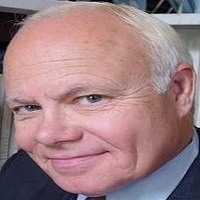
San Francisco - California - USA
Being a trusting leader is challenging. Every leader’s interaction with any team member is a ‘moment of trust.’ So, leaders are constantly adding to or subtracting from their ‘trust accounts’ with each of their team members. And sometimes, the first step in building trust is to stop making withdrawals
Trust:
- Enhances organizational performance because it increases speed & decreases costs
- Without trust a team’s achievements take longer & cost more. So, a lack of trust is a significant business expense
Consider someone with whom you share a high degree of trust:
- How enjoyable is that relationship?
- How well do the two of you communicate?
- How quickly can the two of you accomplish tasks?
This webinar will address questions such as:
- What is trust, how does it work & how do you enhance it?
- What are the core leadership skills that build trust?
- Why is a leader’s success dependent on their ability to build trust with their team?
- How to quiet the voice of pride that is within all of us?
I A Leader’s Influence Requires Employee Willingness
- There are a number of definitions of leadership. Google says thousands. But each of those definitions involves having influence.
- Leaders are set apart from their teams because of the inherent influence & power of their positions
- Leaders rely on their influence - the capability of having an effect on employee behavior to precipitate changes & improvements.
- Leaders are constantly utilizing their influence to achieve the behaviors & outcomes they desire.
- Having that influence & power sounds very appealing. But there is a hitch – a leader influencing an employee is not a passive process – it is grounded in human connection.
- Employees possess the capacity to delay, deflect, resist or ignore influence. So, a leader’s ability to influence employees’ behaviour is
- significantly dependent on those employees’ being willing to be influenced.
II Employee Trust is Based on Their Perceptions of Uncertainty & Vulnerability
- Interpersonal trust is our willingness to make ourselves vulnerable to another person when we are not sure how they will act. So, trusting someone involves our senses of:
- - What is the likelihood of my being harmed?
- Vulnerability - If I am harmed, how significant might the harm be; what is the worst-case scenario?
- Our perceptions of uncertainty & vulnerability combine to inform us of the risk involved & whether we should trust the person
- When we apply these two concepts to an employee - leader relationship today, it's easy to see that there is significant:
- - Today's business environment is changing more rapidly than ever
- - Leaders have significant influence over employees' merits, bonuses, advancement opportunities & job security
- So, employees are continuously forming perceptions of the uncertainty & vulnerability they are facing & then deciding whether to trust their leader
III Being Consistent as a Leader Builds Trust
- Surprisingly, when asked whether they prefer that their leader be strict or lenient, employees frequently say “neither.” They want to trust that their leader will display a predictable, consistent leadership style.
- Trust is a basic human need. When we trust a person, we:
- Have a sense of certainty about how they will act
Can be ourselves because we feel psychologically safe
Have confidence & faith in the person
And when trust is lost, it tends to destroy relationships.
V How Trust Impacts Your Organization’s Success
- Leaders universally agree that trusting relationships are a priority for their organizations.
- In PwC’s Trust Survey 91% of the business executives said their ability to build & maintain trust enhances their organization’s success – including the bottom line
- However, one of our challenges in developing a culture of trust is that surveys also show that 95% of leaders believe they are trustworthy. And when asked whether their leadership team gives appropriate attention to developing a culture of trust:
VI The Nine Trust-Building Leadership Attributes
- Exhibiting Competence & Capability
- Being Authentic, Transparent & Approachable
- Displaying Self-Awareness & Vulnerability
- Dropping Pretenses & Expert Authority
- Creating a Safe Culture That Encourages Employee Feedback
- Displaying Appreciation for Team Members
- Showing They are Less Self & More Others-Centered
- Exhibiting Humility & Confidence
- Behaving with Integrity & Moral Principles
DAY 1 (12:16 AM - 12:19 AM IST)
- Getting to Know Your CMO
-
- Understanding CMO Operations
- Operational/Communication Style
- How to Deal with the Seven CMO Personality Types

Paul R. Hales
Paul R. Hales received his Juris Doctor degree from Columbia University Law School and is licensed to practice law before the Supreme Court of the United States. He is an expert on HIPAA Privacy, Security, Breach notification and Enforcement Rules with a national HIPAA consulting practice based in St. Louis. Paul is the author of all content in The HIPAA E-Tool, an Internet-based, Software as a Service product for health care providers and business associates.